QADER and Palestinian Police Conclude Specialized Training Program on Disability Inclusion in Policing
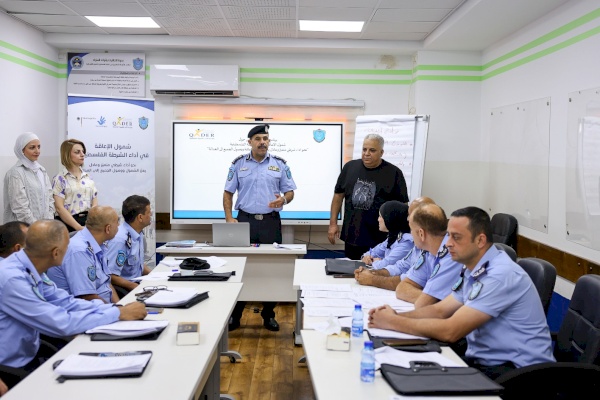
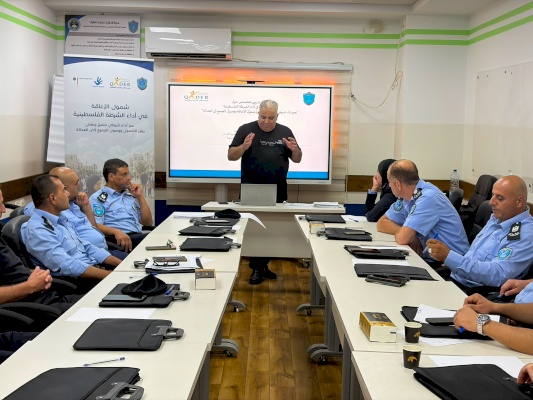
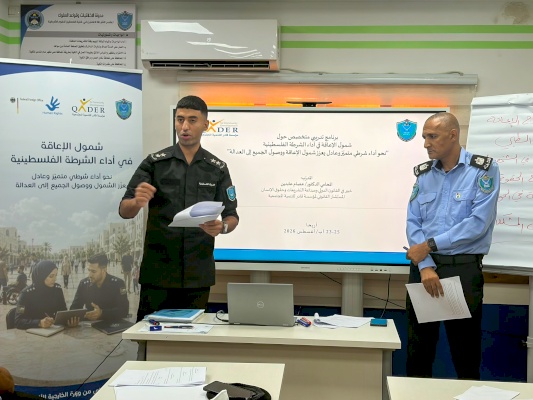
QADER for Community Development, in cooperation with the Complaints and Human Rights Department and the Training Department of the Palestinian Civil Police, concluded a specialized training program entitled “Disability Inclusion in the Performance of the Palestinian Police.” Held at the Palestine College for Police Sciences in Jericho, the three-day program targeted male and female Palestinian police officers and ran from 23 to 25 August 2026. It formed part of joint efforts to advance disability inclusion and develop human rights-based policing practices.
Held under the slogan “Toward Distinguished and Equitable Policing that Promotes Inclusion and Access to Justice for All,” the program combined conceptual and legal foundations with practical application. It aimed to advance disability inclusion in policing through a comprehensive and integrated rights-based approach, connecting human rights principles and values with police decisions, procedures, and practices in real-world settings.
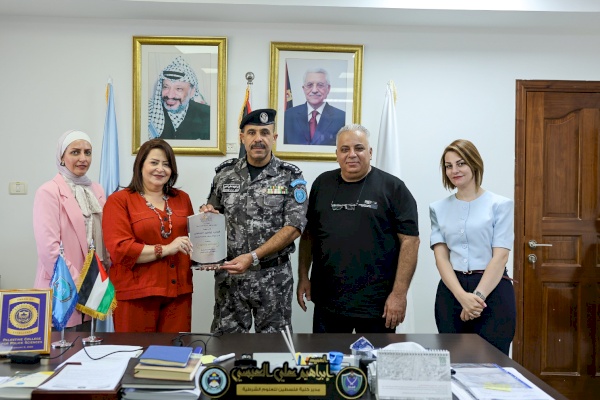
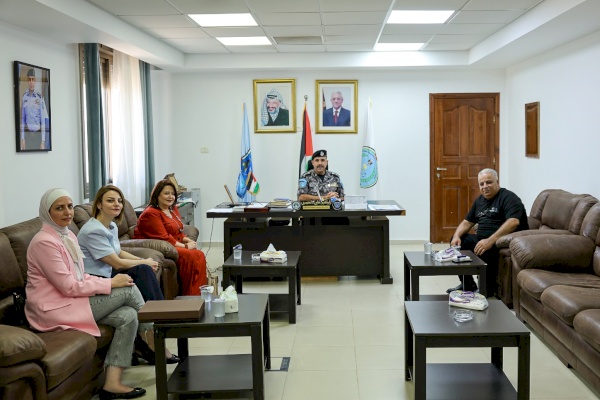
The program opened with a meeting in the office of Brigadier General Ibrahim Al-Absi, Director of the Palestine College for Police Sciences, attended by Mrs. Lana Bandak, Director General of QADER, and QADER’s advocacy team. Brigadier General Al-Absi affirmed the Palestinian Civil Police’s commitment to continuously developing the capacities and skills of its officers, non-commissioned officers, and personnel, and to advancing police performance in accordance with the highest international standards and best practices. Mrs. Bandak emphasized the importance of QADER’s strategic relationship and shared journey with the Palestinian Civil Police, founded on openness and cooperation to advance and institutionalize disability inclusion in policing.
The Program addressed the conceptual framework of disability in relation to the human rights system, the transition from the medical model to the human rights model, disability inclusion as an institutional approach to policing, the national legal framework and international standards from an inclusion perspective, legal capacity and reasonable accommodation, and the police’s role in guaranteeing equitable access to justice. It also examined the police’s role as a first responder within the protection system; disability inclusion in investigations, inquiries, and evidence gathering; legislative and procedural gaps; accessibility and the police work environment; and skills for interacting and communicating with persons with disabilities.
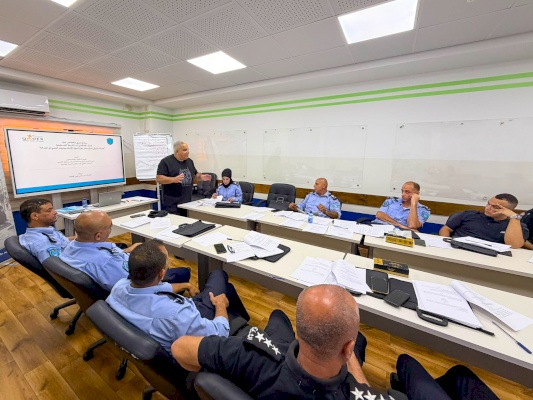
The Program employed an interactive, practice-oriented training methodology that combined discussion, brainstorming, cross-cutting legal analysis, group work, scenario exercises, and simulations. It also featured practical case studies that presented male and female officers with real-world challenges related to justice, protection, and disability inclusion in accordance with international standards and best practices. These included procedural safeguards and evidence gathering, legal capacity and conflicts of interest, reasonable accommodation, and police responsibilities when referral and protection pathways break down, as well as the analysis of recurring patterns, institutional gaps, and ways to address them.
The program also provided practical guidance on interacting and communicating with persons with disabilities in police work. It emphasized addressing the person directly; respecting their will and autonomy; refraining from assuming their needs or imposing assistance; adapting communication methods to the individual and the circumstances; ensuring that a companion or support person does not speak or make decisions in place of the person with a disability; respecting privacy and human dignity; providing reasonable accommodation and appropriate support when needed; and documenting the measures taken.
On the program’s final day, as part of efforts to connect its content with the institutional structure of the police, Brigadier General Dr. Ayman Hamdan, Director of the Complaints and Human Rights Department of the Palestinian Civil Police, delivered a specialized presentation on the department, its mandate, responsibilities, and operational framework. He discussed mechanisms for handling citizens’ complaints and grievances submitted by police personnel, inspection visits to correctional and rehabilitation facilities and detention centers, future priorities, and the importance of advancing disability inclusion in policing.
Brigadier General Dr. Hamdan emphasized the importance of the strategic relationship between the Complaints and Human Rights Department and QADER, which is based on cooperation and mutual openness. He also expressed an aspiration to continue developing partnerships with civil society in ways that strengthen human rights protections and institutionalize disability inclusion in policing.
The program included a specialized training package comprising 20 training and reference materials. These included pre- and post-training assessment tools; practical guidance on interacting and communicating with persons with disabilities in police work; applied training case studies; and a collection of legislation, selected legal provisions, and relevant national and international references on disability inclusion in policing. Together, these resources provide male and female officers with tools and references they can use in their professional practice.
In the context of developing institutional cooperation, Brigadier General Ibrahim Al-Absi praised the quality and content of the training program, emphasizing the importance of keeping pace with international standards and best practices concerning the rights of persons with disabilities and their inclusion in policing at every level. The program was also welcomed by the participating male and female officers, who affirmed the importance of its content and its relevance to their police duties and practices.
Brigadier General Al-Absi announced that the program’s training package would be published on the college’s online portal, allowing officers to benefit from its materials and references. Participants also discussed the possibility of jointly developing a specialized course on disability inclusion in policing through a partnership between the college and QADER for Community Development. This proposal received the support of Brigadier General Dr. Ayman Hamdan, Director of the Complaints and Human Rights Department, and would help transfer the knowledge and expertise gained through training programs into a more sustainable component of the police capacity-building system.
The parties also explored opportunities to develop the strategic partnership and cooperation between QADER and the Palestinian Civil Police’s Complaints and Human Rights Department and to institutionalize this cooperation across multiple areas. These include community awareness and capacity building, the development of police tools and practices, accessibility, accountability and community participation, knowledge production, international cooperation, and the exchange of expertise and best practices. This reflects a shared commitment to moving beyond individual activities and interventions toward a sustainable institutional partnership encompassing the various fields, levels, and components of policing.
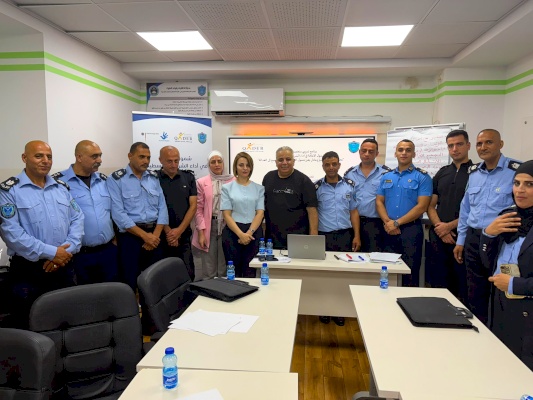
Throughout its three days, the program featured active engagement and in-depth discussion among the participating male and female officers regarding the practical challenges facing disability inclusion in policing and ways to address legal and procedural gaps. The discussions culminated in lessons and conclusions, the identification of practical priorities, and the development of proposals and recommendations to advance inclusion and improve procedures, the work environment, and policing practices.
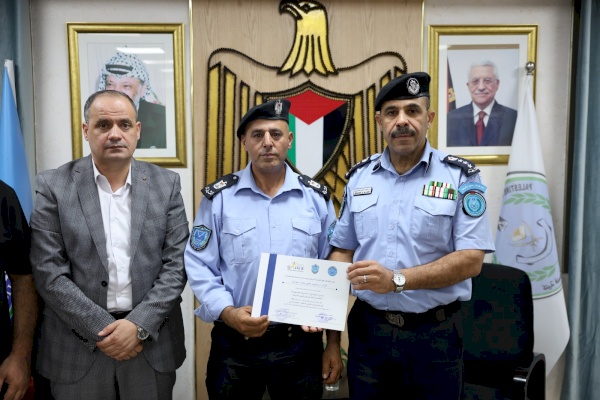
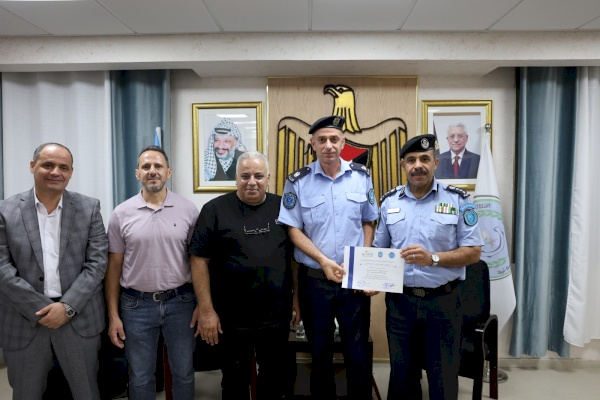
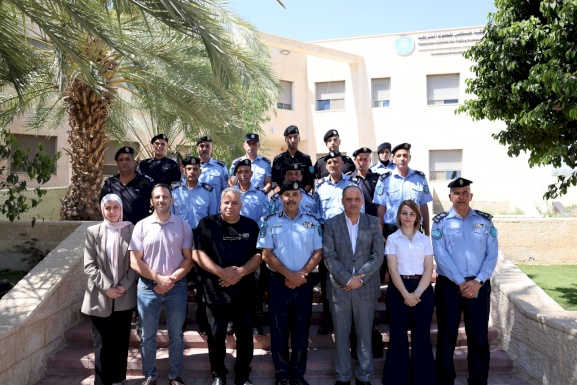
At the conclusion of the program, certificates of participation were presented to the participating officers. QADER and the Palestinian Civil Police are now preparing to launch the specialized training program for a second cohort of police officers on 21 September 2026. The program will run for three intensive training days.
This initiative forms part of a strategic relationship and a shared institutional process aimed at embedding disability inclusion within police capacity building, procedures, the work environment, and policing practices. It seeks to translate knowledge and training into established and sustainable practice at every level, thereby advancing disability inclusion and guaranteeing equitable access to justice.
It is worth noting that this training was conducted within the project “Strengthening Disability-Inclusive Policing and Community Accountability for Access to Inclusive protection and Justice in Palestine”, implemented by QADER for Community Development in partnership with the Palestinian Police, with the financial support from the German Federal Foreign Office.