QADER, the Police, and the General Administration of Complaints: Towards a Complaints System Based on a Disability-Inclusive Approach
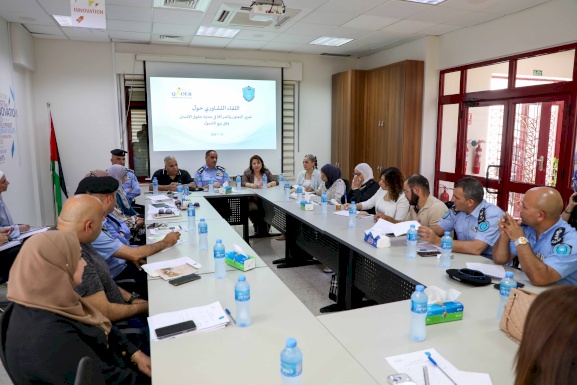
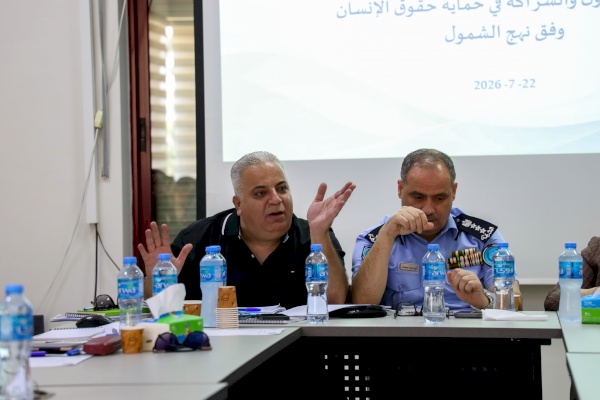
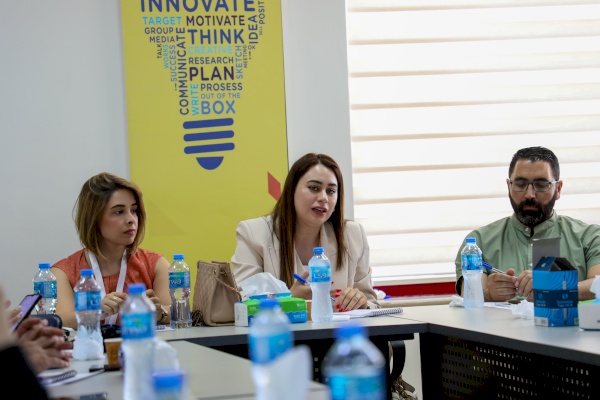
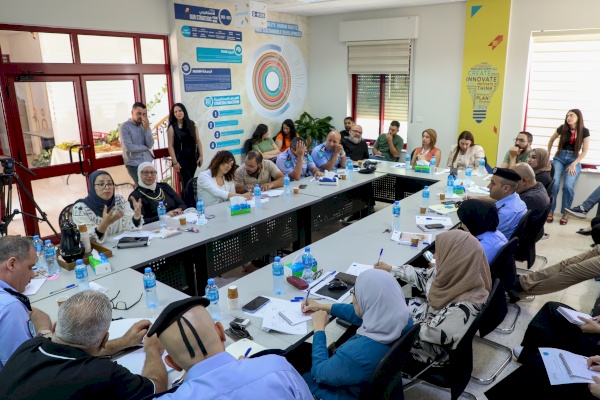
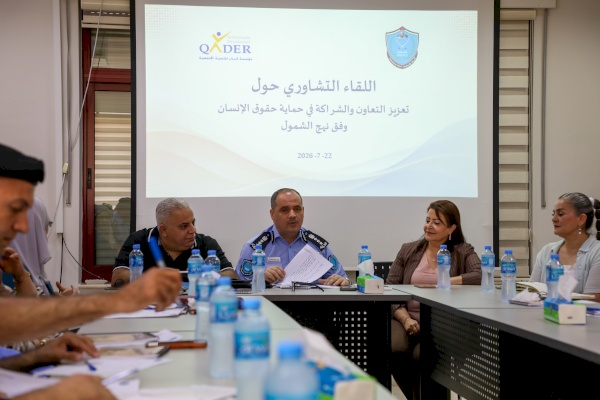
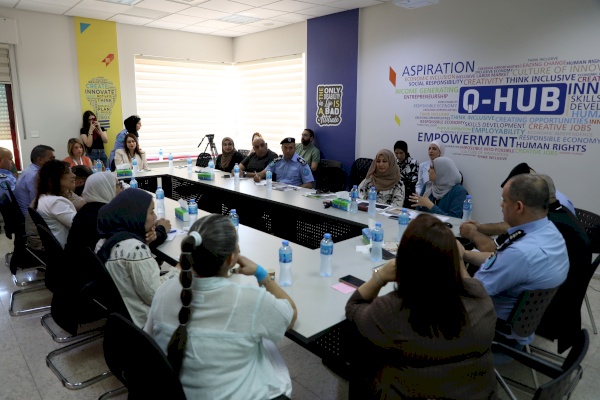
QADER for Community Development and the Grievances and Human Rights Department of the Palestinian Police, in cooperation with the General Administration of Complaints at the General Secretariat of the Council of Ministers, held a consultative meeting aimed at strengthening cooperation and partnership in the protection of human rights through a disability-inclusive approach. The meeting was attended by representatives of the Bar Association, the Syndicate of Psychologists and Social Workers, the Independent Commission for Human Rights, the General Union of Persons with Disabilities, and the Ministry of Local Government, in addition to representatives of civil society organizations, higher education institutions, and organizations of persons with disabilities in Bethlehem Governorate.
The meeting was held within the framework of strengthening constructive cooperation and partnership between the Grievances and Human Rights Department of the Police, the General Administration of Complaints at the General Secretariat of the Council of Ministers, civil society organizations, and organizations representing persons with disabilities. It aimed to integrate disability inclusion into the national complaints system, thereby contributing to ensuring that persons with disabilities have access to justice and mechanisms for remedy on an equal basis with others, in line with human rights principles and the relevant obligations under the Convention on the Rights of Persons with Disabilities and international standards, particularly the principles of equality and non-discrimination, accessibility, equal recognition before the law, and access to justice.
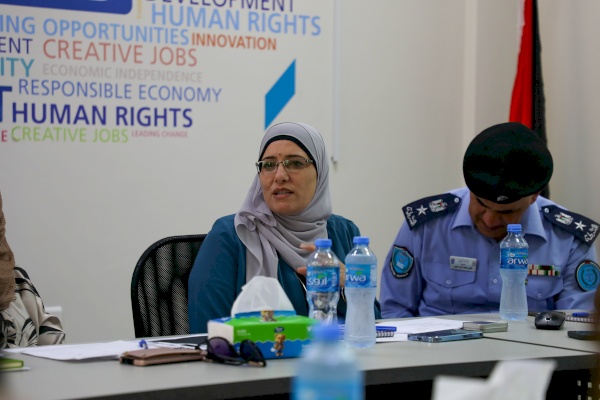
Mrs. Lana Bandak, Director General of QADER for Community Development, opened the meeting by emphasizing the importance of strengthening cooperation between official institutions and civil society organizations and embedding an inclusive, rights-based approach within the national complaints system. She stressed the need to ensure the effective participation of persons with disabilities and their access to services, protection mechanisms, and complaint mechanisms without discrimination.
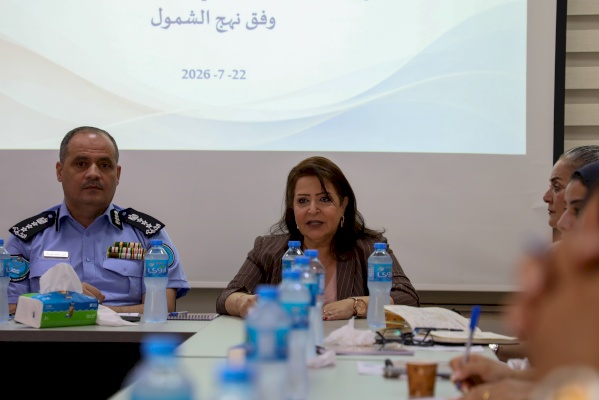
Brigadier General Dr. Ayman Hamdan, Director of the Grievances and Human Rights Department of the Police, delivered a presentation on the Department, its functions, mandates, objectives, and legal framework. He reviewed the mechanisms for receiving complaints, the criteria for accepting or rejecting them, the stages of complaint handling, and available remedies. He also highlighted the Department’s role in conducting periodic inspection visits to rehabilitation and correction centers and detention centers, as well as its future directions for further developing its work.
The General Administration of Complaints at the General Secretariat of the Council of Ministers, represented by Mrs. Manal Zeitawi and Ms. Nisreen Al-Haddar, also delivered a presentation on the complaints system and its role in strengthening access to justice. The presentation addressed the legal framework governing the work of the General Administration of Complaints, as well as its functions and mandate in handling complaints related to ministries, public bodies, governorates, and security agencies, along with the mechanisms and procedures for addressing such complaints. The presentation also discussed the role of complaint analysis in improving government performance and policies, as well as efforts to develop the government’s computerized complaints system in accordance with a disability-inclusive approach. Particular emphasis was placed on protecting the confidentiality of complainants’ information and raising public awareness of available complaint mechanisms.
In his remarks, Dr. Isam Abdeen, Legal Advisor at QADER, addressed ways to strengthen and operationalize inclusion within the national complaints system. He emphasized that ensuring access for persons with disabilities to complaint mechanisms requires moving beyond merely making services generally available toward removing legal, procedural, physical, communication, and digital barriers that may prevent persons with disabilities from using such mechanisms effectively and independently, in line with the Convention on the Rights of Persons with Disabilities, international standards, and best practices.
Participants emphasized that inclusion within the complaints system is directly linked to the right of access to justice and that ensuring substantive equality requires the provision of reasonable accommodation, accessibility, and appropriate procedural accommodations in accordance with the diverse needs of persons with disabilities. This includes persons with intellectual and psychosocial disabilities and requires respect for their will, legal capacity, and right to participate in procedures affecting their rights, while ensuring access to effective remedies.
Participants discussed several challenges and opportunities related to strengthening disability inclusion within the complaints system. They emphasized the importance of addressing disability as a cross-cutting issue and integrating a disability perspective into policies, procedures, guidelines, and data collection and analysis mechanisms. This is essential to measuring the extent to which persons with disabilities can access the complaints system and assessing the impact of measures taken to ensure their rights.
Participants also stressed the importance of continuing meetings and dialogue among official institutions, civil society organizations, and organizations of persons with disabilities; strengthening media engagement and community awareness of complaint submission mechanisms; and working toward the development of a sustainable institutional framework that ensures the integration of the rights of persons with disabilities into the complaints system and across relevant sectors.
The meeting concluded with a number of key recommendations, including strengthening partnerships with organizations representing persons with disabilities and civil society organizations; developing mechanisms to measure the impact of disability inclusion within the complaints system; ensuring the provision of reasonable accommodation, accessibility, and procedural accommodations; enhancing the digital accessibility of the computerized complaints system; developing accessible awareness-raising materials and guidelines; and strengthening awareness-raising programs across different governorates in accordance with an inclusive approach.
The organization of this meeting forms part of ongoing joint efforts to move beyond the concept of merely making services available toward achieving genuine inclusion and equality in the enjoyment and exercise of rights. These efforts seek to strengthen institutional accountability and ensure that persons with disabilities can access complaint mechanisms, justice, and remedies independently, accessibly, and on an equal basis with others.