
QADER Participates in National Session on Disability Statistics and Calls for Rebuilding the System through an Inclusion Approach
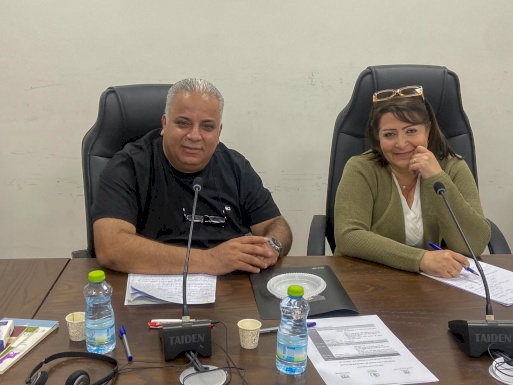
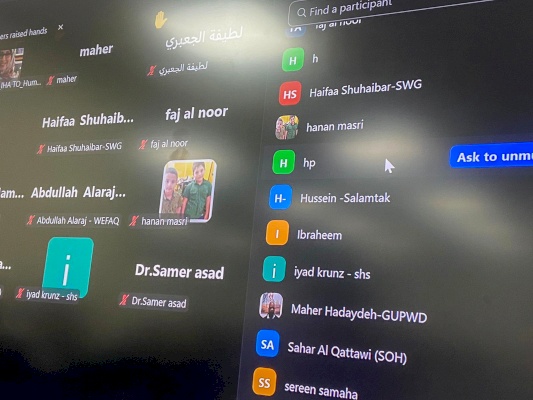
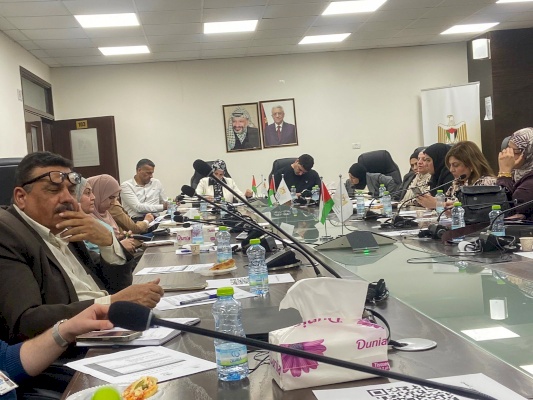
QADER for Community Development participated in the roundtable proceedings of the national consultative session titled “Disability Statistics in Palestine: Current Challenges and a Future Vision for Inclusion”, held at the Ministry of Social Development in cooperation with the Palestinian Central Bureau of Statistics and the World Food Programme. The session brought together official and civil society stakeholders from the West Bank and Gaza Strip, with the aim of reviewing national methodologies and measurement tools in line with international standards, evaluating previous experiences, and analyzing gaps and barriers affecting the inclusion of persons with disabilities in surveys, ultimately contributing to the development of a shared national roadmap for advancing the data system.
During its participation, QADER presented a comprehensive legal, rights-based, and policy-oriented analysis, emphasizing that the core challenge in Palestine is no longer a lack of data, but rather the absence of an integrated national system for producing disability data grounded in an inclusion approach. This includes governance, cross-sectoral integration, and linking data to decision-making processes. QADER highlighted that the continued reliance on data dating back to 2011, considering major field transformations and ongoing atrocities since October 7, 2023 and their devastating impact on persons with disabilities, undermines not only the credibility of indicators but also their ability to inform policy responses, ensure accountability for grave violations, and guarantee effective remedies.
QADER further clarified that we are facing an accumulated structural crisis in the disability data system that cannot be reduced to technical gaps or the development of measurement tools, and that it requires a multi-level response based on a practical pathway of five interconnected layers: the national layer through the establishment of a unified national disability data system grounded in governance and institutional commitment; the cross-sectoral layer to ensure data integration, flow between government entities, and its effective use in planning; the international layer through activating commitments to international cooperation, knowledge transfer, and capacity-building in line with international standards; the participation layer by operationalizing the legal obligation to involve organizations of persons with disabilities in all stages of data production based on an inclusion approach; and the accountability layer by linking data to monitoring, documentation, and legal evidence pathways to ensure effective remedies and prevent impunity, reflecting the depth and the institutional and legal breadth of the issue.
QADER stressed that the methodological conflation between general censuses and specialized surveys leads to the production of incomplete statistical knowledge and results in policies that do not reflect the actual needs of persons with disabilities, particularly in contexts of armed conflict, occupation, grave violations, and international crimes that have targeted them in Palestine during the aggression. It further affirmed that future directions toward the Population, Housing, and Establishments Census 2027 do not substitute for the need to conduct a specialized disability-inclusive survey, especially after the passage of fifteen years since the first and last survey conducted in 2011. This also constitutes a binding legal obligation following the accession of the State of Palestine to the Convention on the Rights of Persons with Disabilities (CRPD) and its publication in the Official Gazette pursuant to Decree-Law No. (36) of 2023, and the resulting obligations on national entities under Article (31) and on international entities under Article (32) of the Convention.
QADER affirmed that partnership with organizations of persons with disabilities constitutes an international legal obligation under Article (4), paragraph (3) of the Convention on the Rights of Persons with Disabilities (CRPD) and is not merely a consultative practice. Operationalizing this obligation requires the inclusion of these organizations in all stages of data production, from design to implementation and analysis, ensuring the adoption of a rights-based inclusion lens. It further emphasized that focusing on measurement tools, including Washington Group methodologies, despite their technical importance, does not compensate for the absence of a national system for the production, use, and dissemination of data, built on an inclusion approach within integrated layers of institutional and legal response.
In the legal context, QADER confirmed that the Palestinian legislative framework on disability, despite its age, contains existing foundations, particularly in the Law on the Rights of Persons with Disabilities of 1999, which establishes under Article (7) a clear legal basis for the production and flow of information and data across sectors between official entities. This is further reinforced by the General Statistics Law of 2000 and the 2005 Council of Ministers’ decision issuing its complementary regulations, when read in conjunction with disability-related legislation. However, these provisions have not been activated in a manner that ensures institutionalized data flow, which explains the persistence of gaps despite their long-standing recognition. This gap has further deepened despite Palestine’s accession to the Convention on the Rights of Persons with Disabilities (CRPD), its publication in the Official Gazette, and its supremacy over national legislation.
QADER expressed its full readiness to engage in a deep institutional partnership to address this structural gap, including the development of studies and research, the implementation of specialized training programs, and capacity-building based on a disability inclusion approach as a lens for data production and analysis. This also includes strengthening monitoring and documentation systems in line with United Nations standards and evidentiary standards adopted by the International Criminal Court, as well as providing national and international partners with analytical papers and the necessary technical support. Such support includes contributing to the design of national indicators, the development of data collection tools, and the production of data that is usable for planning and accountability. QADER also announced the forthcoming launch of a reference guide on the fundamentals of international law and tools for monitoring, documentation, and accountability from a disability inclusion perspective (2026 edition), as a leading national and international resource that contributes to harmonizing concepts, enhancing data quality, and linking data to accountability and justice pathways.
Considering the above, and in response to the need to move from diagnosis to actual implementation, QADER presented the following recommendations at the conclusion of its participation in the national consultative meeting as a practical pathway for rebuilding a disability-disaggregated data system based on an inclusion approach:
- Establishing a binding national disability data system based on governance, cross-sectoral integration, and linking data to decision-making.
- Activating existing legal provisions to ensure the regular and systematic flow of administrative data between official entities.
- Institutionalizing national partnerships and defining roles and responsibilities, including organizations of persons with disabilities in data production.
- Conducting a specialized national disability survey based on an inclusion approach as a legal obligation after 15 years since the last survey.
- Ensuring methodological distinction between general censuses and specialized surveys and preventing the substitution of one for the other in future directions.
- Adopting the Washington Group as a tool for measuring functional difficulties within a disability inclusion approach, in alignment with the CRPD, and in partnership with organizations of persons with disabilities to ensure conceptual accuracy and link data to inclusion.
- Linking disability data to legal accountability pathways and ensuring its usability for evidence-based proof and remedy.
- Building specialized national capacities in monitoring and documentation in line with United Nations standards and international evidentiary standards.
- Aligning the statistical legislative framework with international obligations following Palestine’s accession to relevant international conventions.
- Ensuring periodic publication and continuous updating of disability data within a binding national framework, in a manner that enhances transparency and data flow, supports the identification of policy priorities, contributes to building a national strategy based on disability inclusion, and strengthens accountability and justice pathways.
The challenge in Palestine does not lie in how many persons with disabilities there are, but in the existence of a system capable of recognizing them, measuring their realities through an inclusion lens, and transforming their experiences into policies, rights, and accountability. When a data system is built without a disability inclusion approach, absence becomes embedded within the protection structure itself. When data fails to see them, policies fail to protect them, and justice fails to deliver redress.