
Economic Empowerment Program

"Towards a Meaningful Participation of Persons with Disabilities in the Palestinian Labor Market"
The Economic Empowerment Program promotes the right of persons with disabilities to decent work and supports their effective participation in the Palestinian labor market and economic life, thereby strengthening their economic and social independence. The program also seeks to address the exclusion and discrimination faced by persons with disabilities and enable their equitable access to opportunities in employment, vocational training, and entrepreneurship, ensuring improved inclusion and full participation in economic and community development.
The program recognizes that achieving economic empowerment is not limited to developing the skills of persons with disabilities or enhancing their readiness for employment. It also requires removing the barriers that restrict their participation, adapting workplaces, and promoting inclusive employment practices among employers. Accordingly, the Program adopts an integrated approach that combines the empowerment of participants with engagement with employers, organizations, and the wider community, contributing to a more inclusive and equitable labor market.
Program Objectives
The Economic Empowerment Program aims to:
- Raise public awareness and foster positive attitudes toward the right of persons with disabilities to decent work, while reducing stereotypes and discriminatory practices concerning their abilities and potential. This contributes to a more inclusive working environment and effective participation in the Palestinian labor market and economic life.
- Develop the employability skills of persons with disabilities, strengthen their orientation toward economic participation, and facilitate their access to employment and self-employment opportunities. This enhances their labor-market readiness, economic independence, and ability to make decisions concerning their professional and economic pathways.
- Improve accessibility and the inclusion of persons with disabilities in workplaces, while promoting reasonable accommodations and inclusive institutional practices.
- Strengthen evidence-based advocacy and accountability to advance inclusive policies, legislation, and practices through research and policy analysis, thereby contributing to the removal of structural barriers and the development of more inclusive and equitable legal and policy frameworks.
Target Groups
The program primarily targets young women and men with various types of disabilities, including persons with intellectual and psychosocial disabilities, while considering their individual needs, abilities, and circumstances. It also engages the families of persons with disabilities, recognizing the important role families play in supporting their transition to training and employment and in strengthening their independence.
The program also works with employers in the private, civil society, and local government sectors, as well as organizations involved in the labor market and economic development. This aims to strengthen their capacity to provide more inclusive training and employment opportunities and to adapt workplaces in ways that ensure the effective and safe participation of persons with disabilities.
Approach
Through QADER’s Entrepreneurship and Skills Development Center (Q-HUB), the Program adopts an individualized, flexible, and multi-pathway approach that is grounded in human rights and centered on persons with disabilities. It recognizes them as rights holders and key actors in determining their own professional and economic choices and pathways. This approach considers each individual’s abilities, interests, aspirations, needs, and circumstances, while ensuring their effective participation in identifying the pathway, interventions, and forms of support best suited to them.
Accordingly, participants’ needs, abilities, and interests are assessed, and their intervention pathways are determined in consultation with them. These pathways include developing life, technical and vocational skills, job readiness, internships and employment, or self-employment and entrepreneurship. Participants also receive guidance, psychosocial support, and follow-up services, as well as reasonable accommodations and connections to training and employment opportunities. These efforts are complemented by work to remove barriers in training and workplace environments, thereby strengthening participants’ economic independence and effective participation in the labor market.
Program Pathways
1. Job Readiness, Internships, and Employment
The program develops participants’ job-readiness skills and provides paid internship opportunities with employers across various sectors and fields. Participants receive follow-up and guidance throughout the internship period, along with support to transition, whenever possible, into permanent employment.
2. Entrepreneurship and Small Enterprises
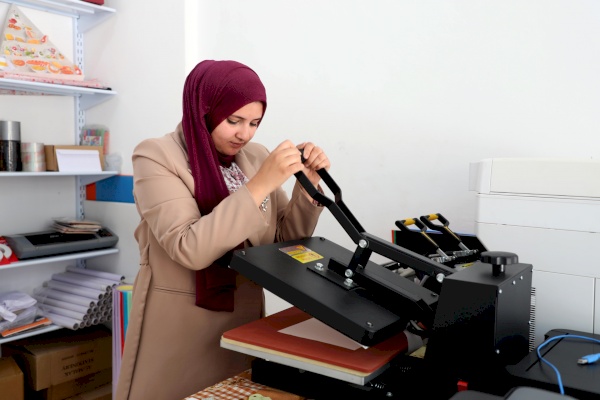
The program supports persons with disabilities who wish to pursue self-employment by providing training in entrepreneurship and business-plan development, assessing business ideas and existing enterprises, and offering support to establish or expand businesses. It also provides technical guidance in financial management, marketing, banking services, registration, licensing, and other areas related to business sustainability.
3. Supporting Community-Based Economic Models and Enterprises
The program also supports business models and community initiatives that combine capacity-building for local institutions with meaningful training and employment opportunities for persons with disabilities. This includes developing production lines, providing vocational training, improving accessibility, and offering technical and marketing support.
4. Technical and Vocational Education and Training (TVET)
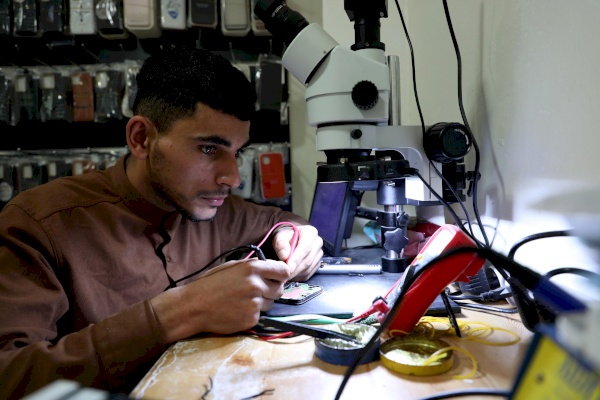
The program promotes access for persons with disabilities to vocational and technical education and training opportunities that align with their abilities, interests, and labor-market requirements. This is achieved by assessing participants’ needs and vocational interests, connecting them with appropriate training programs and centers, and providing the support and reasonable accommodations necessary for their effective participation in training.
To visit QADER’s Economic Empowerment Platform, click here.
To learn more about the QADER Entrepreneurship and Skills Development Center (Q-HUB), click here.